





Range Estimator Tool
To help with range anxiety, enter vehicle, temperature and driving condition (city or highway).
Created by EV Zapster

BUYER’S GUIDES

‘Lectric Love
Today’s bestChinese SUVs & EV SUVs
The SUV revolution
I had a minivan….to be honest, 2 minivans; truly, I loved them. That’s right, I would relish that we could stuff, a dual-stroller, every accoutrement sold in the local baby store, doubled and enough snacks to last the trip to Alpha Centauri. Sure, I’d ride my over-powered 2-wheeler when I craved a conveyance of cool, but I’ll tell you, I felt a certain happiness knowing that the entire contents of my world, were well housed in that minivan; I felt complete. My tell? A surreptitious smile peeking out from my well-worn trucker cap as I let the 6 cylinder change-table sing. Today’s choices are much, much better ; SUV sounds much cooler than minivan and as I did with the latter, you can still wear your biker key-chain when it’s your turn for drop-off.
Chinese SUV revolution is no longer a trend. It’s an established market reality. In five years, brands that most Western consumers had never heard of have delivered credible, often exceptional alternatives to the Volkswagen Tiguan, Toyota RAV4, and BMW X5. The under-$60,000 bracket is where they’re most dangerous and most compelling.
Why Chinese SUVs Belong in the Conversation
The narrative around Chinese cars has shifted decisively. Early models were rightly criticised for derivative styling, dubious quality control, and thin after-sales support. That story is outdated. Today’s competitive Chinese SUV segment is defined by serious vertical integration, genuine engineering ambition, and critically a willingness to price aggressively against established rivals.
From family-friendly plug-in hybrids with seven seats to electric performance SUVs that charge from 10 to 80% in ten minutes, the $60,000 ceiling encompasses an extraordinary range of capability. Choosing between them requires understanding what you’re actually optimising for.
This guide is organized by type (EV vs other), price tier and mission, so you can find the right car for your situation rather than simply the one with the best headline spec.
A Dedicated Spotlight
The Best Chinese Electric SUVs
The pure-EV SUV segment is where Chinese brands have made the most dramatic inroads globally. Every one of the models already covered in this guide is fully electric or has an EV variant — but four deserve special attention as the definitive expressions of what Chinese electric SUV engineering can deliver in 2026. Together they span from accessible family transport to a Tesla-slaying performance machine that outsold the Model Y in China. ensure smooth gathering experiences while you work your magic.

BYD Sealion 7
The big brother to Seal & Seal U
BYD Sealion 7
specifications
Price (international) ~$32 000–$48 000
Battery 82.5kWh or 91.3kWh Blade LFP
Range (WLTP) up to 312 miles (502km)
Charging 150kW (standard) / 230kW (Excellence)
Power: 308hp (RWD) / 523hp (AWD)–100 km/h
0–100 km/h 6.7s (RWD) / 4.5s (AWD)
Notable features: 5 star Euro NCAP / ANCAP, global availability, battery life, warranty


BYD Sealion 7 impressions
Kia and Tesla take notice. If you want a Chinese electric SUV that you can walk into a dealer and buy today in most international markets with strong warranty support and a five-star safety rating, the BYD Sealion 7 is almost certainly your answer.
The Sealion 7 launched in Europe in late 2024 and has since rolled out to Australia, Southeast Asia, India, and Latin America. In Australia alone, 10,864 units were delivered in the first ten months after launch, and it has beaten the Tesla Model Y in monthly sales on multiple occasions. That’s an extraordinary result for a brand that didn’t exist in those markets three years ago.
The formula is well-judged. Three variants are available: Comfort RWD (82.5kWh, 308hp), Design AWD (82.5kWh, 523hp), and Excellence AWD (91.3kWh, 523hp) — the last offering up to 312 miles of WLTP range. The Excellence uses BYD’s 800V architecture for DC charging at up to 230kW, dramatically faster than the standard model’s 150kW limit.
The interior is a genuine highlight. Material quality is impressive, with soft-touch surfaces and synthetic leather upholstery throughout, and the 15.6-inch rotating touchscreen is responsive and well-integrated, supporting wireless Apple CarPlay and Android Auto. BYD’s signature Blade Battery tech — LFP chemistry with cell-to-body integration — promises longevity that NMC rivals can’t match.
Space is another strong suit. At 4,830mm long and 1,925mm wide, it’s 230mm longer and 70mm wider than a Toyota RAV4, offering genuinely generous rear accommodation despite the sloping coupe roofline. A 520 litre boot expands to 1,789 litres with the rear seats folded, and there’s a 58 litre frunk as a bonus.
The honest caveats: the Sealion 7 doesn’t quite accelerate with the same ferocity as some rivals, and there’s more body lean than you’d find in a Kia EV6 or Tesla Model Y. It’s more family hauler than driver’s car. For the majority of buyers, that’s precisely the right trade-off.
BYD backs the Sealion 7 with a six-year/150,000km bumper-to-bumper warranty and eight years or 160,000km on the Blade Battery pack among the most generous coverage in the segment.
The most accessible Chinese EV SUV internationally. It has beaten the Tesla Model Y in monthly Australian sales multiple times since launching there in February 2025, and is backed by a six year/150,000km bumper-to-bumper warranty and eight years or 160,000km on the Blade Battery among the most generous in the segment.
BYD Sealion 7 verdict
★★★★★
The most accessible and globally supported Chinese EV SUV in its class. Not the most exciting drive, but thoroughly competent, spacious, and backed by a warranty that underlines BYD’s confidence in its own technology. The choice for buyers who want a Chinese EV they can buy, service, and rely on right now.
Yeah!
+ Performance: quiet ride, quick acceleration
+ Design: 2 distinct front-end designs — “Tiger” and “Leopard” — each with their own interior theme and ambient aesthetic.
+ Tech: Dual displays (15.6-inch and 13.2-inch touchscreens) driven by Qualcomm’s 8155 chip
Meh.
– Brakes: Numb feel
– Steering: Intrusive active steering

XIAOMI YU7
The tech showcase
XIAOMI YU7
specifications
Price(China) ~$35,600 (Standard) to ~$48,200 (Max)
Battery: 96.3kWh LFP (Standard/Pro) / 101.7kWh NMC (Max)
Range (CLTC) 760km (Max) to 835km (Standard)
Charging 5.2C, +620km in 15 minutes
Power:(Max) 508kW / 690hp
0–100 km/h: 5.88s (RWD) / 4.27s (Pro) / 3.23s (Max)
Notable features: ADAS chip Nvidia Drive AGX Thor


XIAOMI YU7 impressions
Few product launches in automotive history have generated the kind of immediate commercial impact the Xiaomi YU7 achieved. The YU7 secured over 200,000 firm orders in the first three minutes after launch a figure that borders on the absurd. In January 2026, the YU7 ranked first in China by sales with 37,869 units sold, compared to 16,845 Tesla Model Y vehicles twice as many. The Model Y, which had led Chinese EV sales as recently as December, plunged to 20th place in January.
This kind of disruption doesn’t happen by coincidence. The YU7 is legitimately exceptional.
Built on Xiaomi’s Modena EV platform, the mid-to-large YU7 measures 4,999mm long with a 3,000mm wheelbase notably larger than the Model Y’s 4,797mm length and 2,890mm wheelbase. Three variants are offered: Standard (RWD, 235kW), Pro (AWD, 365kW), and Max (AWD, 508kW). The top-spec Max reaches 100km/h in 3.23 seconds and carries a 101.7kWh NCM battery with a CLTC range of 760km. The Standard variant stretches to an extraordinary 835km CLTC.
All YU7 trims ride on Xiaomi’s 800V silicon carbide high-voltage architecture and support 5.2C ultra-fast charging, adding up to 620km of range in just 15 minutes. That charging performance is among the fastest of any production EV at any price.
The interior is a tech showcase. Standard equipment includes Nappa leather seats with 123° reclining zero-gravity function and massage, a 135° electrically adjustable rear seat, and a 1.1 metre-wide “HyperVision” panoramic screen combining three Mini LED displays. Xiaomi’s Surging OS software brings the company’s consumer electronics ecosystem into the cabin, with the kind of software polish that comes from a company that has shipped hundreds of millions of smartphones.
Structurally, the YU7 is seriously engineered. The chassis uses 90.2% high-strength steel and aluminium with a torsional rigidity of 47,610 N·m/deg, and Xiaomi claims compliance with over 50 crash test standards. The computing backbone is Nvidia’s Drive AGX Thor platform the same chip powering some of the most advanced ADAS systems available.
The important caveat: the YU7 is currently a China-only model. Xiaomi’s founder has confirmed no current plans to bring the EV business to the US market, and a European launch via parallel import channels is the only route for most international buyers as of early 2026. The YU7 GT a 990hp performance variant is likely to become the first Xiaomi model officially sold in Europe, but a full international rollout is still on the horizon.
XIAOMI YU7 verdict
★★★★★
Technically, the most impressive Chinese EV SUV currently in production. Extraordinary range, blistering charging speed, genuine luxury interior, and a 3-second sprint time from a car priced from $35,600 in China. International buyers will need patience — but what’s on offer is a glimpse of exactly where the market is heading.
Yeah!
+ Interior: High-quality materials
+ Technology: Advanced – Nvidia’s Drive AGX Thor platform found in ADAS systems.
+ Performance: The top-spec Max 0-100km/h in 3.23 seconds with a 101.7kWh NCM battery and range of 760km
Meh.
– Price: High
– Availability: Limited outside China

MG S5 EV
New & improved
MG S5 EV specifications
Price(China) ~$32000 to ~$40,000
Battery: 47.1 kWh battery & 62 kWh battery (better choice)
Range (CLTC) 211 miles to 298 miles (425 kms)
Charging: 139 kW for 10% – 80% in 28 mins
Power & Torque: 125kW ; 250 Nm
0–100 km/h: 8.6 seconds
Notable feature|Best international dealer network of any Chinese EV brand|
4


MG S5 EV impressions
For buyers outside China who want a polished, well-supported Chinese EV SUV without navigating grey import complexities, the MG S5 EV deserves a prominent place in the conversation. MG owned by SAIC, one of China’s largest automotive groups has the longest international dealer network of any Chinese brand, with over 150 UK dealers alone and strong coverage across Europe, Australia, and Southeast Asia.
The S5 EV is MG’s replacement for the ZS EV, and it directly addresses the criticisms levelled at its predecessor. The cheap interior has been replaced with a swathe of soft-touch materials in all the places you’re likely to touch, giving it a much more premium feel. MG’s engineers listened to complaints about climate controls hidden in touchscreen menus and added a panel of physical switches and made it quick to disable the more annoying driver assistance systems.
The result is a car that feels genuinely mature for its price. Positioning is competitive: at around $32,000–$40,000 depending on market and trim, it slots between the BYD Sealion 7 and the Xpeng G6, offering more dealer accessibility than either of its Chinese rivals at comparable price points.
MG’s replacement for the ZS EV directly addresses past criticisms, making it the most practical choice for buyers who prioritize dealer network depth over headline specs.
MG S5 EV verdict
★★★★★
The most practical choice for buyers who want Chinese EV value with genuine dealer network depth and after-sales reassurance. It won’t set pulses racing, but it will start every morning without drama and have a service centre nearby.
Yeah!
+ Interior: Smart looking
+ Value: Excellent for the money
+ Driving: Engaging
Meh.
– Charging: Slower compared to rivals
– Cost: Essence 62 can be pricey

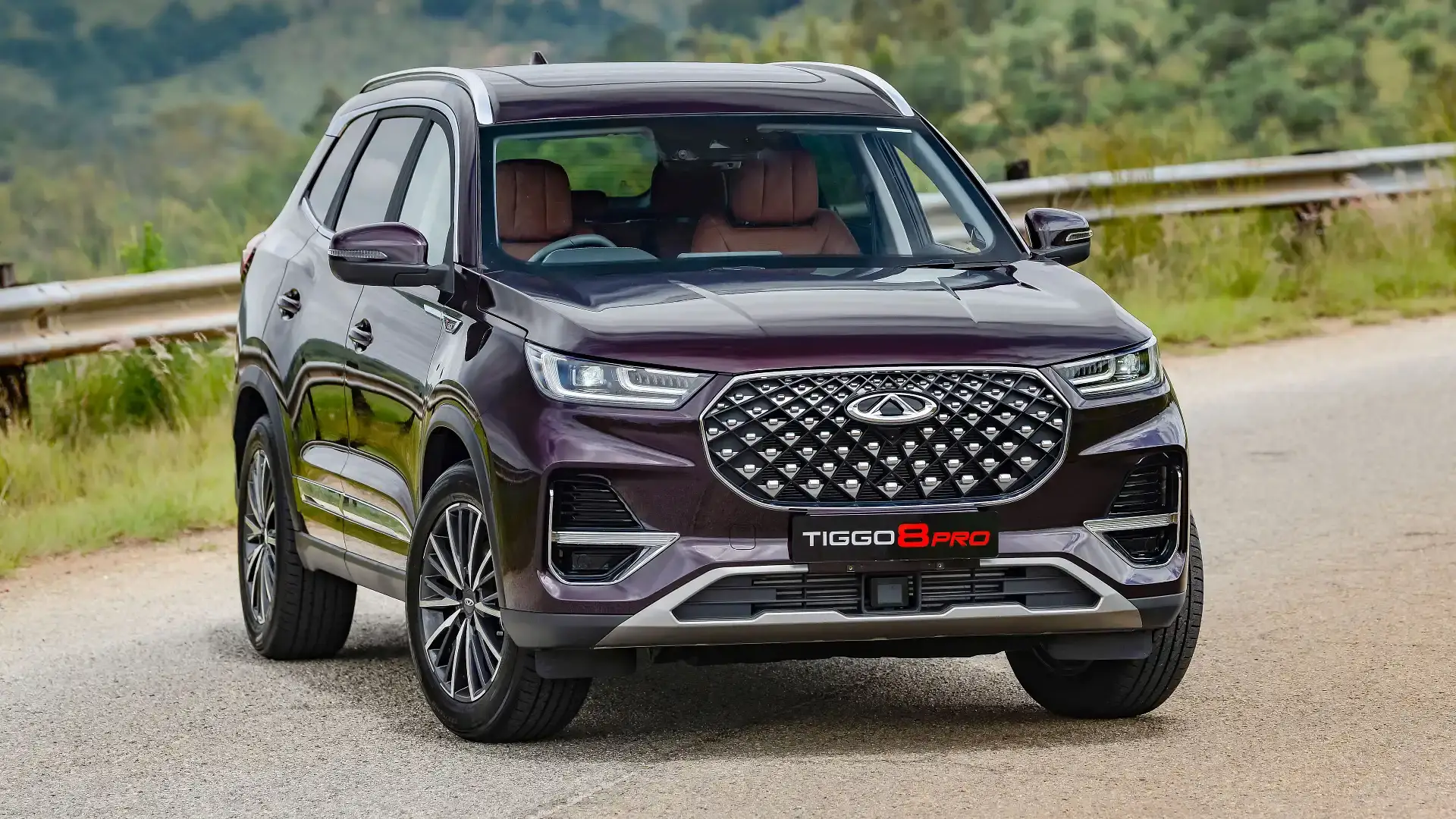
CHERY TIGGO 8
Family transport benchmark
CHERY Tiggo 8 specifications
Price: ~$12,300–$17,200
Powertrain: 1.6T petrol / PHEV option
Output: 147kW / 310Nm
Wheelbase: 2,825mm
Battery:
6000 mAh
Display:
15.6″ 4K UHD
Seats: 5 or 7


CHERY Tiggo8 impressions
Chery Tiggo 8 (Fifth Generation) — The Family Benchmark (~$12,300–$17,200)
The Tiggo 8 has been Chery’s flagship SUV for years, and the fifth-generation model launched in late 2025 represents the most complete version yet. Four trims span from approximately $12,300 to $17,200 at launch pricing, positioning it squarely against the Haval H6 and Changan CS75 Plus in China’s fiercest competitive segment.
The exterior takes a notably bolder direction, offering buyers a choice between two distinct front-end designs “Tiger” and “Leopard” each with their own interior theme and ambient aesthetic. Both share the same fundamentals: a 2,825mm wheelbase, a 1.6-litre turbocharged engine producing 147kW and 310Nm mated to a 7-speed wet dual-clutch, and a tech-laden cabin centred on dual displays (15.6-inch and 13.2-inch touchscreens) driven by Qualcomm’s 8155 chip.
Standard features include 10-layer cloud SPA seats with massage, ventilation, and heating; 256-colour ambient lighting; 50W wireless charging; and Chery’s Falcon 500 Level 2 ADAS suite with highway pilot and memory parking. At this price point, these are remarkable inclusions.
Australian buyers know the Tiggo 8 in its PHEV “Super Hybrid” guise, which reviewers have praised for its seven-seat practicality and plug-in capability at a price that undercuts combustion-only rivals.
Chery Tiggo 8 verdict
★★★★★
The best value proposition in the segment. Seven seats, serious ADAS, and premium comfort features for the cost of a stripped Korean compact. The interior finish has caught up with ambition
Yeah!
+ Value: Excellent for the money
+ Interior: Luxurious with many standard features
+ Seating: Accommodating 7 seater
Meh.
– Driving: Experience is less refined than premium rivals
– 3rd row: Suitable for occasional use

BYD Seal U
The whole package
BYD Seal U Specifications
Price :~$18,040 (hybrid) / ~$20,800 (EV
Powertrain PHEV (DM-i) or pure EV
Combined range (PHEV)|1,000+ km
Wheelbase 2,825mm
Battery:
Blade LFP mAh
Display:
15.6″ 4K UHD
Seats 5
- |Notable feature |Industry-leading plug-in range

BYD Seal U impressions
BYD Seal U (Sealion 6) — *The Plug-In Sweet Spot* (~$18,000–$25,000)
BYD’s Seal U, marketed as the Sealion 6 in export markets, launched in China at approximately $18,040 for the hybrid version, with the full EV starting around $20,800. In export markets like Australia, pricing runs higher, but it remains competitive against the Mitsubishi Outlander PHEV and Toyota RAV4 Plug-In it targets.
The formula is straightforward: BYD’s proven DM-i plug-in hybrid system, the proprietary Blade Battery in LFP chemistry, and a mid-size SUV body that accommodates five adults without compromise. The updated 2026 Premium Extended Range variant pushes combined driving range beyond 1,000km on a full tank plus battery charge, with over 50% more electric-only range than its predecessor.
Dynamically, reviewers note that the Sealion 6 doesn’t try to be exciting, it prioritizes refinement and daily usability, which is precisely what the segment demands. The rotating 15.6-inch touchscreen is a signature BYD quirk; the software has improved enough to make it genuinely usable, though a few more physical buttons would still be welcome.


BYD Seal U verdict
★★★★★
The PHEV SUV benchmark at its price point. Long combined range, well-engineered battery technology with extraordinary longevity, and enough real-world polish to challenge established Japanese and Korean competition.
Yeah!
+ Interior: Spacious
+ Value: Competitive pricing
+ Engine: Strong hybrid engine
Meh.
– Capacity: Smaller storage compared to rivals
– Experience: Cheap-feeling cabin and not exciting to drive

XPENG G6
The exciting normal
XPENG G6 specifications
Price (international)|~$34,900–$44,900
Battery |80.8kWh LFP :
16 GB DDR4
Range (WLTP) |up to 354 miles (570km) :
1 TB NVMe SSD
Charging |up to 451kW (10–80% in ~12 min) :
NVIDIA GTX 1650 4GB
0–100 km/h: 5.4s (RWD) / ~4.0s (AWD Performance)|:
6000 mAh
Display:
15.6″ 4K UHD
Notable feature: Class-leading charging speed System:
Linux Ubuntu 20.04 LTS


XPENG G6 impressions
I like vanilla. despite the fact that it has become synonymous with boring. In some references it may mean that, but not in the case of the Xpeng G6. Here, it’s Viva Vanilla! If the Tiggo 8 is about squeezing maximum practicality from a budget, the Xpeng G6 is about delivering maximum technology at a price that undercuts the Tesla Model Y. Starting at approximately $34,900 internationally, it fires at the heart of the premium, electric, family SUV segment with genuine firepower.
The 2026 update was significant. A new 80.8kWh LFP battery replaced the previous NMC pack, which had an unexpected benefit: the G6 can now charge at up to 451kW making a 10–80% fill achievable in approximately 12 minutes. That charging speed rivals or beats anything in the segment short of the updated Zeekr 7X. Long-range range tops out at 354 miles (570km), exceeding the equivalent Tesla Model Y Long Range.
One review described the interior as having “good perceived quality” at key touch-points, noting the cabin feels “plusher than an MG and on par with a BYD.” The central touchscreen layout draws obvious Tesla comparisons, but Xpeng’s software is reportedly easier to navigate. The revised front lightbar, updated rear styling, new digital rear-view mirror, and ambient lighting of the 2026 model address the car’s previous anonymity.
Where the G6 falls short is driving involvement; one summed it up as “not a car for involved drivers.” The upside: it’s spacious, comfortable, generously equipped, and offers entertainment integration (Netflix, Spotify, Apple TV+) without subscription lock-ins.
Verdict.
★★★★★
XPENG G6
A rational, tech-rich alternative to the Tesla Model Y at a lower price, with superior charging speed. What it lacks in driving excitement, it compensates for with everyday competence. offer free shipping on all orders within the United States. If you are not satisfied with your purchase, you may return it within 30 days for a full refund. Please note that the product must be in its original packaging and in new condition to be eligible for a return.
For international orders, shipping costs will be calculated at checkout. Returns are accepted within 30 days of delivery, but the customer is responsible for return shipping costs.
Yeah!
+ Interior: Spacious
+ Charging: Fast charging capability
+ Pricing: Competitive
Meh.
– Ride: Poor comfort
– Design: Generic

XPENG G7
Great value
XPENG G7 specifications
Price (China) ~$32,780 (international)|~$34,900–$44,900
Battery 80kWh |80.8kWh LFP
Range (CLTC) 702km WLTP)
Charging 280kW (10–80% in ~20 min) to 451kW (10–80% in ~12 min)
0–100 km/h: 5.4s (RWD) / ~4.0s (AWD Performance)|:
6000 mAh
0–100 km/h 5.4s (RWD) / 4.0s (AWD)
Notable feature: Exceptional range-to-price ratio


XPENG G7 impressions
What do CUVs want to be when they grow up? Meet the Xpeng G7. While the G6 targets city-focused buyers with ultra-fast charging, its larger sibling the G7 takes a different approach: sheer range. Launched in mid-2025, the G7 packs an 80kWh battery with a CLTC-rated range of 702km, comfortably ahead of the Tesla Model Y Long Range’s of approx. 533km WLTP.
At $32,780 in China, it undercuts the G6 internationally and punches significantly below the Tesla Model Y ($42,990+), making the value equation almost confrontational. AWD performance trim delivers a 4.0-second 0–100 sprint. The 800V SEPA 2.0 platform supports 10–80% charging in 20 minutes, and Vehicle-to-Load (V2L) functionality is included.
The G7 is larger than the G6, offering more rear cabin space, a meaningful consideration for family buyers. It hasn’t yet achieved the same international footprint as its sibling, but its China pricing makes it one of the most competitively positioned large EVs globally.
Verdict
★★★★★
Verdict: If range anxiety is your primary concern and you’re buying in or importing from China, the G7 offers an extraordinary combination of size, range, and price. International availability is its main constraint.
Pros
+ Pricing: Competitive
+ Range: Impressive, up to 702 km
+ Tech: Fast-charging, AI-assisted driving.
Meh.
– Availability: Limited outside China
– LiDAR absence

Zeekr 7X
Bottled Lighting
ZEEKR 7X specifications
Price (China) ~$31,800–$37,400 ; (Australia, USD equiv.)|~$38,500–$50,800
Battery options 75kWh LFP or 103kWh NMC
Range (CLTC) up to 802km
Charging(900V) 10–80% in ~10 min
Top power (AWD Ultra) 795hp (585kW)
0–100 km/h (AWD) 2.98s
Notable feature |LiDAR standard, near-luxury interior| range-to-price ratio


ZEEKR 7X impressions
Few Chinese SUVs have made a more immediate impact internationally than the Zeekr 7X. The 2026 model year update launched in October 2025 introduced a complete 900V high-voltage architecture, standard LiDAR across all trims, Nvidia’s Thor-U computing platform for ADAS, and the option of a 103kWh CATL Qilin battery. The top AWD Ultra produces 795hp and reaches 100km/h in 2.98 seconds.
For buyers in markets like Australia, where the base RWD starts at approximately AU$57,900 (around $38,500 USD), the 7X offers a specification sheet that embarrasses significantly more expensive European rivals. Carscoops’ review of the Performance AWD noted that the flagship “doesn’t just keep up with Tesla’s best, it beats it in several areas.”
The cabin is the 7X’s most surprising achievement. Zeekr’s European design team based in Gothenburg has delivered an interior with what reviewers consistently describe as near-luxury build quality: knurled metal switches, metal speaker grilles, soft-touch materials across virtually every surface, dual 50W cooled wireless charging pads, a massive centre console, and front seats with heating, ventilation, massage, and memory. The 21-speaker Dolby Atmos audio system and 36.2-inch AR head-up display are class-leading technology for the price.
Safety credentials are strong as the 7X holds a five-star Euro NCAP rating, and LiDAR is now fitted as standard on all 2026 variants. Trunk space stands at 537 litres with a 62-litre frunk on RWD models.
The 2026 900V architecture enables a 10–80% charge in approximately 10 minutes, making it one of the fastest-charging EVs on the market at any price. CLTC range for the most efficient variant reaches 802km with a 5 star NCAP rating.
Verdict
★★★★★
The best all-round Chinese SUV available today. Build quality, technology, safety, and performance are all at or above European premium levels. The only caveats are emerging dealer networks in many export markets and a brand history too young for long-term reliability data.
Yeah!
+ Interior: Spacious and luxurious
+ Charging: Rapid charging capable
+ Tech: Impressive
Meh.
– Styling: Bland design
– Visibility: Limited in rear

EV SUV Rankings
EV SUV Rankings at a Glance
| Model | Starting Price (USD) | Range (real-world est. | 0–100 km/h | Global Availability | Notable |
| MG S5 EV | ~$32,000 | ~300–350km | ~7s | Excellent | Dealer network, reliability peace of mind |
| BYD Sealion 7 | ~$32,000 | ~350–400km | 6.7s / 4.5s | Very Good | Broadly available, Blade Battery longevity |
| Xpeng G6 | ~$34,900 | ~430–480km | 5.4s / ~4.0s | Good | Ultra-fast charging, tech features |
| Zeekr 7X | ~$38,500 | ~480–560km | 5.8s / 2.98s | Moderate | Premium interior, performance, safety |
| |Xiaomi YU7 | ~$35,600 (China) | ~550–650km | 5.88s / 3.23s | China only (2026) | Range, charging speed, future-proof tech |
SUV head to head all fuel types
| Model | Chery Tiggo 8 | BYD Sealion 6 (Seal U) | MG S5 EV | BYD Sealion 7 | Xpeng G7 | Xiaomi YU7 | Xpeng G6 | Zeekr 7X |
| Price (USD) | ~$12,300 | ~$18,040 | ~$32,000 | ~$32,000 | ~$32,780 (China) | ~$35,600 (China) | ~$34,900 | ~$38,500 (intl) |
| Powertrain | Petrol/PHEV | PHEV or EV | Pure EV | Pure EV | Pure EV | Pure EV | Pure EV | Pure EV |
| Range | 1,000km+ combined (PHEV) | 1,000km+ combined | ~300–350km real world | up to 502km WLTP | 702km CLTC | 760–835km CLTC | 570km WLTP | 802km CLTC |
| 0–100 km/h | ~9s | ~8s | ~7s | 6.7s / 4.5s | 5.4s / 4.0s | 5.88s / 3.23s | 5.4s / ~4.0s | 5.8s / 2.98s |
| Noted for | Large families, budget | Plug-in efficiency | Best dealer network | Global reach, Blade Battery | Range-first buyers | Tech & performance (China) | Ultra-fast charging | Premium quality, safety |
Be mindful
1. Dealer networks are still maturing.
BYD is the most established in most export markets, planning 120 UK dealers by end of 2025. MG has the longest-established network. Xpeng and Zeekr are catching up but service infrastructure is thinner than legacy brands. Factor in your distance from a service centre.
2. Range figures require translation.
CLTC (China’s test standard) figures run approximately 15–25% higher than real-world performance and are considerably more optimistic than European WLTP numbers. The Zeekr 7X’s 802km CLTC figure translates to roughly 550–580km in real-world mixed conditions still excellent, but not 800km. The Xiaomi YU7’s 835km CLTC would equate to approximately 580–640km in practice.
3. Long-term reliability is an open question.
BYD has enough global sales volume to start building a reliability picture, and it looks encouraging. MG has years of export experience. Zeekr, Xpeng, and Xiaomi are newer to export markets. Extended warranties (BYD offers six years / 150,000km vehicle plus eight years on the battery) partially offset this uncertainty.
4. Charging standards matter.
Most Chinese EVs sold in export markets now come with CCS adapters for Europe and compatible standards elsewhere. Verify before purchase, particularly for vehicles grey-imported from China.
5. Tariffs change the maths significantly.
The EU has imposed additional tariffs on Chinese EVs, meaningfully raising prices in European markets. UK tariff decisions were still in flux as of early 2026. Buyers in markets without Chinese EV tariffs (Australia, New Zealand, Southeast Asia) are getting dramatically better value.
Final Verdict
★★★★★
For families who need space and efficiency without spending above $20,000, the Chery Tiggo 8 and BYD Sealion 6 set benchmarks their price-equivalent Western rivals genuinely struggle to match. Buyers who want to go fully electric with the widest support network should start with the BYD Sealion 7 or the MG S5 EV globally proven, well-warranted, and available at your local dealer. Move further up the budget and the Xpeng G6
makes a compelling case with its class-leading charging speed, while the Zeekr 7X delivers near-luxury quality and 10-minute charging in an internationally available package.
The wildcard is the Xiaomi YU7, the car that outsold the Tesla Model Y two-to-one in China in January 2026 and does it with 835km of claimed range, a 3.23-second sprint time, and Nappa leather zero-gravity seats for $35,600. It’s currently China-only, but it represents what the entire segment will look like in three years. When it arrives internationally, nothing priced under $60,000 will be untouchable.
The broader story is undeniable: the floor price for a genuinely premium, long-range EV SUV has dropped to $35,000–$42,000. That’s not a temporary anomaly. It’s the new normal.
N.B. All prices approximate as of early 2026. International pricing varies significantly by market, applicable tariffs, and trim level. CLTC range figures are Chinese market test standard apply a 15–25% reduction for real-world estimates. Specifications based on latest available model year.