
Manufacturer’s Spotlight by Lectric Love A deep dive in the history and vision of Mahindra, a global AI, mobility, technology company.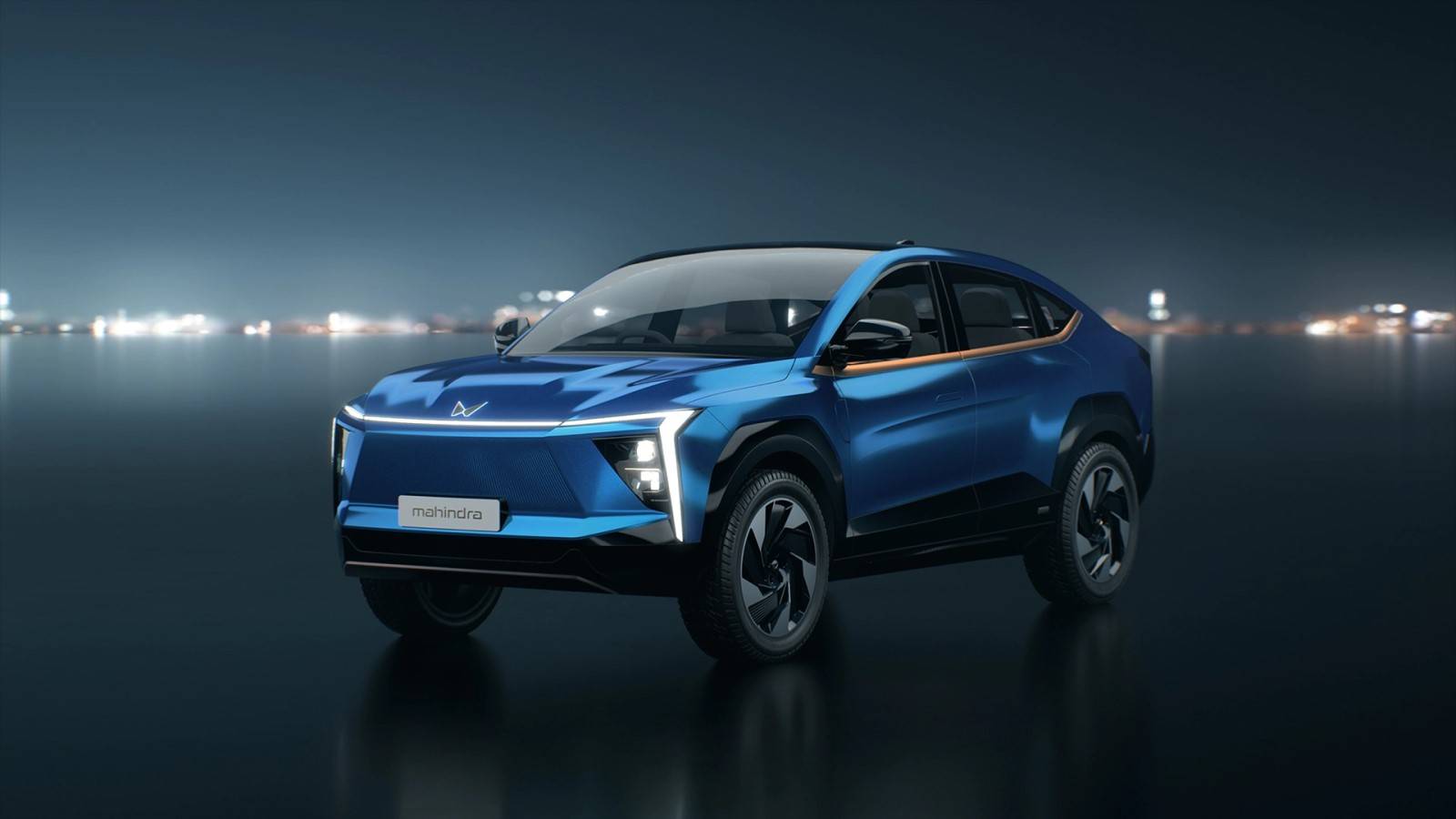


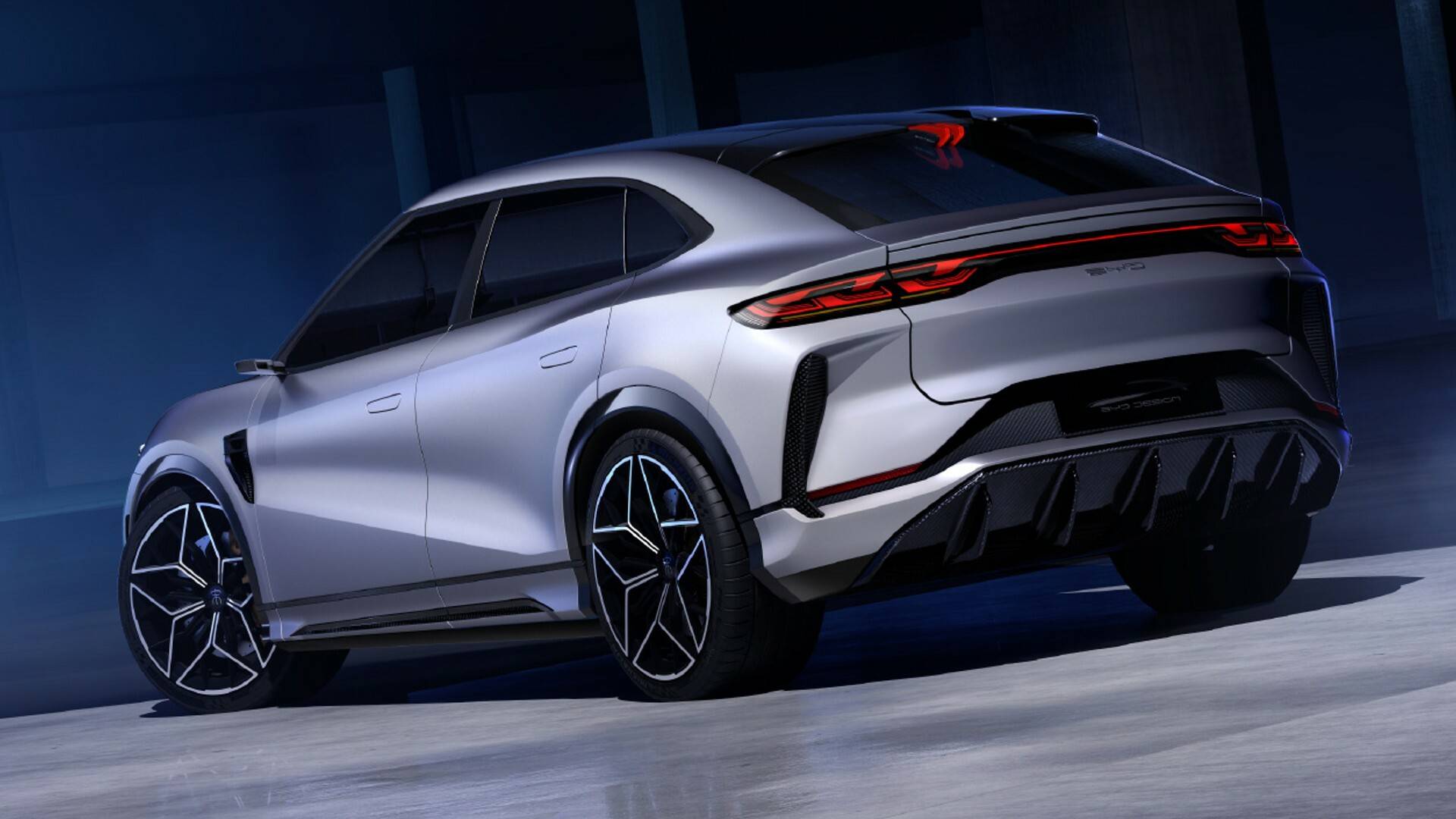


Spotlight on BYD
With relentless development are they the heir apparent to Tesla?


History
BYD: An acronym for Bring Your Dreams
BYD is a Chinese multinational company that has grown from a battery maker into one of the world’s largest electric vehicle (EV) manufacturers. Looking at BYD’s timeline, we see its growth, in and out of China, as exceptional.
🔋 1995–2002: BYD battery Beginnings
- BYD was founded in 1995 in Shenzhen, China by Wang Chuanfu. It didn’t start as a vehicle manufacturer.
- They found their start as a rechargeable battery manufacturer, competing with Japanese suppliers.
- BYD rapidly became a major global supplier of lithium-ion batteries for electronics.
- Went public on the Hong Kong Stock Exchange in 2002. content creation and ensure design consistency.
At the beginning of this century, BYD entered the auto industry with the acquisition of Qinchan automobile. This was the start of BYD’s development in automotive manufacturing.
🚗 2003–2010: BYD enters the Auto Industry
- Acquired a small car manufacturer, Qinchuan Automobile, in 2003.
- Launched its first car, the BYD F3, which became popular in China.
- Introduced one of the world’s first mass-produced plug-in hybrids, the BYD F3DM, in 2008.
- In 2008, Warren Buffett’s company Berkshire Hathaway invested in BYD, giving it global credibility. 1995–2002: BYD battery Beginnings
⚡ 2010–2020: EV Expansion & Global Reach
- BYD expanded into electric buses, trucks, taxis, and monorails (SkyRail).
- They became a leader in electric buses globally, with deployments in Europe, North America, and Asia.
- BYDe developed its own Blade Battery (see below) technology for improved safety and longevity.
- Began strong exports to markets including Norway, the UK, and Australia.
🌍 Today, BYD has become a global EV powerhouse
- In 2022, BYD stopped producing purely gasoline-powered cars to focus entirely on EVs and plug-in hybrids.
- Surpassed Tesla in total plug-in vehicle sales in several quarters.
- Expanded manufacturing to Thailand, Brazil, Hungary, and other regions.
- Popular BYD global models:
- BYD Atto 3: Compact SUV
- BYD Seagull: Budget-friendly urban car
- BYD Seal: Premium performance sedan
- BYD Dolphin: Compact hatchback
- BYD Han: Premium luxury sedan
| BYD achievements | Statistics |
| Volume leader | 3.02 million vehicles sold in 2024 (vs. Tesla: 1.8 million) |
| EV Market leader | World’s #1 EV manufacturer since Q4 2023 |
| BYD market value | $86 billion USD market cap as of January 2026 |
| Infrastructure | Owns the entire supply chain: batteries, motors, chips, controllers, and final assembly |
BYD in Canada 2026
The Canadian federal government has negotiated a new trade deal with China, bringing in 49 000 EVs with a reduced duty of 6.1% to Canada.
The new $2.3 billion program will offer individuals and businesses purchase or lease incentives of up to $5,000 for battery electric and fuel EVs, and up to $2,500 for plug-in hybrids (PHEVs) with a final transaction value of up to $50,000 on cars made by countries with whom Canada has free trade agreements. In the Jan. 30 – Feb. 2, 2026 survey, 61% of Canadians were in favour of Chinese EVs in the Canadian market. Public Safety Minister Gary Anandasangaree said, during a recent parliamentary committee hearing, that Ottawa would ensure “safeguards” are put in place.1
- https://www.cbc.ca/news/business/canadians-chinese-electric-vehicles-9.7087040
The following 3 BYD models coming to Canada soon:
BYD Atto 3


BYD Seagull


BYD Dolphin


BYD technology
BYD launched its Sky Eye 5.0 intelligent driving assistance system. The updated platform features a new large model architecture that utilizes reinforcement learning and closed-loop training technologies to enable AI system self-evolution.
According to company specifications, Sky Eye 5.0 delivers significant performance upgrades, setting new industry benchmarks for safety. The system is designed to handle complex driving scenarios—such as passing on narrow roads, navigating around temporary obstacles, managing construction zones, and interacting with low-speed two-wheeled vehicles—with efficiency comparable to human drivers.
The system’s hardware foundation includes LiDAR, five millimeter-wave radars, 12 cameras, and the NVIDIA Orin-X chip, which provides 254 TOPS of computing power.2
2: https://chinabizinsider.com/byds-sky-eye-5-0-launch-poised-to-disrupt-chinas-urban-noa-market-in-2026/
BYD and public transportation in Canada
BYD and Uber released a joint statement announcing a “partnership designed to bring 100,000 new BYD electric vehicles onto the Uber platform across key global markets.” The ride-share program would begin in Europe and Latin America, expanding into the Middle East, Canada, Australia and New Zealand.
In large format, public transportation, BYD Canada announced that the Toronto Transit Commission aka TTC (Canada’s largest and North America’s third largest transit operator) will put into operation, 10 zero-emission, 40-foot K9M battery-electric buses.
The Blade Battery Advantage
BYD’s proprietary Blade Battery technology (lithium iron phosphate (LFP) pack with a distinctive flat-cell design) is used in every BYD vehicle. The technology was tested using the following metrics:
Safety: Some EV batteries have succumb to a fire risk known as thermal runaway. The BYD Blade Battery passed a nail penetration test, showcasing its safety.
Cold tolerance: Many around the world demand reliable winter performance. In some parts of the world, temps can drop to -40 C. BYD claims that LFP chemistry handles temperature extremes better than NMC or NCA alternatives. When paired with BYD’s active thermal management, the Blade Battery seems to instil confidence for more reliable winter performance.
Longevity: BYD claims 3,000+ charge cycles to 80% capacity, which depending on the frequency of charging can last the lifetime of the vehicle.
Daily charging: It is recommended that EV and other rechargeable batteries be charged to 80%, to prevent accelerated degradation. BYD claims that the LFP can be charged to 100% daily, limiting the aforementioned risk.
BYD Seagull

Segment: Budget-friendly urban car
Estimated Price: $20,000 – $25,000 CAD
New car competitors: None currently in Canada at this price point
This is the vehicle most often mentioned in EV reviews. The Seagull with a price tag of approximately $10,000 USD in China, it leads us to wonder whether this will be the first of future EVs to achieve price-parity with ICE cars.
| Specification | 30 kWh Version | 38 kWh Version |
|---|---|---|
| Battery | 30 kWh LFP Blade | 38 kWh LFP Blade |
| Range (CLTC) | 305 km | 405 km |
| Real-World Range | ~200 km | ~280 km |
| Motor | 55 kW (75 hp) | 75 kW (100 hp) |
| Top Speed | 130 km/h | 130 km/h |
| DC Fast Charging | ~40 kW | ~40 kW |
| Est. CAD Price | $20,000-$22,000 | $23,000-$25,000 |
Optimal market: Do you remember when you could buy an economy car for under $20k? Those days may be here again. The BYD Seagull is an option for all who seek economy EV cars. These can be city-commuters, second-vehicle households, new drivers or budget-minded owners.

BYD Dolphin

Segment: Compact hatchback
Estimated Price: $32,000 – $40,000 CAD
New car competitors: Nissan Leaf Plus, VW ID.3
We all seem to need more room. The BYD Dolphin addresses this need as a practical five-door hatchback with useable range, modern technology all at an reasonable price.
| Specification | Standard Range | Extended Range |
|---|---|---|
| Battery | 45 kWh LFP Blade | 60.4 kWh LFP Blade |
| Range (WLTP) | 340 km | 426 km |
| Real-World Range | ~280 km | ~360 km |
| Motor | 70 kW (95 hp) | 150 kW (201 hp) |
| 0-100 km/h | ~10 seconds | ~7 seconds |
| DC Fast Charging | 60 kW | 88 kW |
| Est. CAD Price | $32,000-$35,000 | $36,000-$40,000 |
Standard features (even on base trim):
- Heat pump (uses the refrigerant system to efficiently manage temperature without significantly draining the vehicle’s battery, extending driving range)
- 360-degree camera system
- Adaptive cruise control
- 12.3-inch rotating touchscreen
- V2L (vehicle-to-load) capability: Acts as a portable power source, allowing electric vehicles to use their battery power to supply electricity to external devices or other vehicles.

BYD Atto 3

Segment: Compact crossover SUV
Estimated Price: $36,000 – $42,000 CAD
New car competition: Hyundai Kona Electric, Kia Niro EV
Do you remember the world before crossovers? It’s somehow difficult as most buyers like the practicality which they afford. BYD’s crossover and best-seller outside China, the Atto 3 delivers practicality, legitimate range, and aggressive pricing vs. competitors.
| Specification | Standard Range | Extended Range |
|---|---|---|
| Battery | 50 kWh LFP Blade | 60 kWh LFP Blade |
| Range (WLTP) | 345 km | 420 km |
| Real-World Range | ~290 km | ~350 km |
| Motor | 150 kW (201 hp) | 150 kW (201 hp) |
| 0-100 km/h | ~7.3 seconds | ~7.3 seconds |
| DC Fast Charging | 70 kW | 88 kW |
| V2L Output | 3.3 kW | 3.3 kW |
| Cargo Space | 440 L / 1,338 L folded | Same |
| Est. CAD Price | $36,000-$38,000 | $40,000-$42,000 |
An interior unlike others: From the door pocket’s musical guitar-strings to the 12.8-inch rotating touchscreen, the Atto 3 has much to offer.
BYD Seal

Segment: Premium performance sedan
Estimated Price: $42,000 – $65,000 CAD
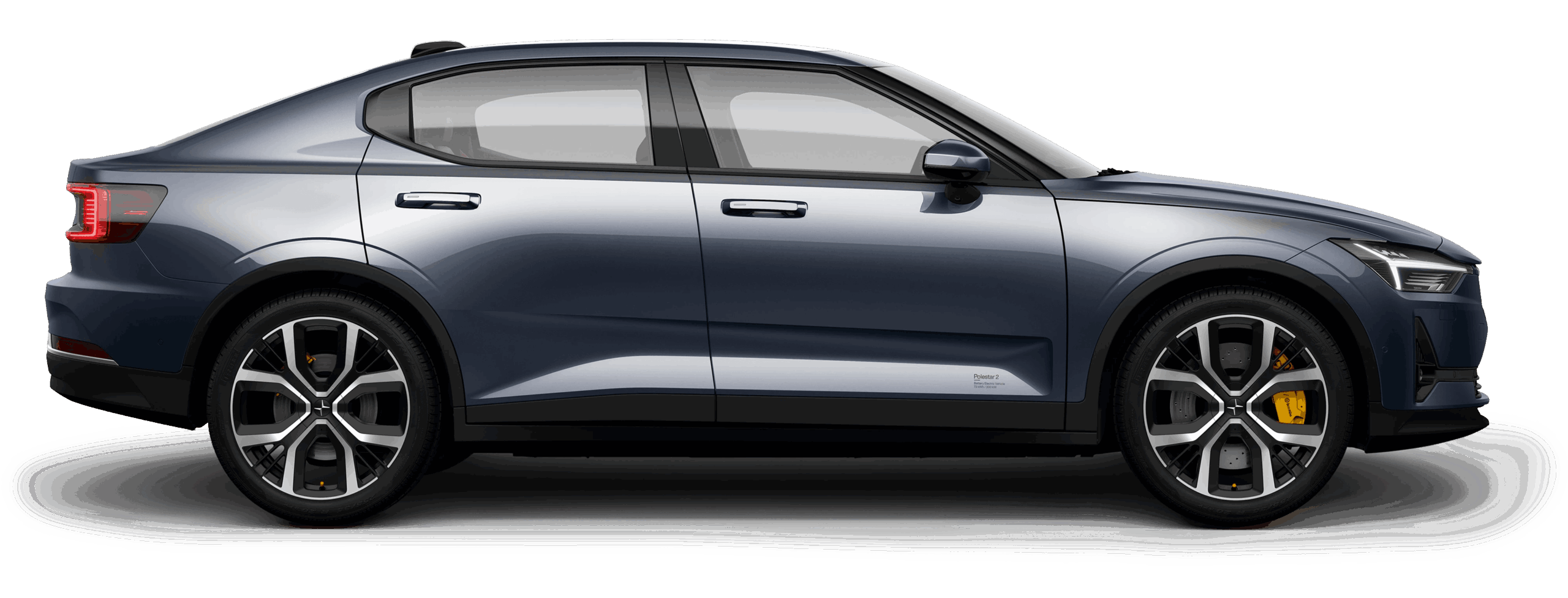
New car competitors:Tesla Model 3, Hyundai Ioniq 6, Polestar 2
What if you want more? You want to show others that BYD isn’t just about econo-cars. The Seal may be your answer. It’s specced like the Tesla Model 3 yet with a significantly reduced price.
| Specification | Dynamic (RWD) | Premium (RWD) | Performance (AWD) |
|---|---|---|---|
| Battery | 61.4 kWh LFP | 82.5 kWh LFP | 82.5 kWh LFP |
| Range (WLTP) | 460 km | 570 km | 520 km |
| Real-World Range | ~380-400 km | ~470-500 km | ~430-450 km |
| Motor(s) | 230 kW (308 hp) | 230 kW (308 hp) | 390 kW (523 hp) dual |
| 0-100 km/h | 5.9 seconds | 5.9 seconds | 3.8 seconds |
| DC Fast Charging | Up to 150 kW | Up to 150 kW | Up to 150 kW |
| Est. CAD Price | $42,000-$46,000 | $48,000-$52,000 | $58,000-$65,000 |
BYD Seal RWD vs. Tesla Model 3 RWD
| Metric | BYD Seal Premium RWD | Tesla Model 3 RWD |
|---|---|---|
| Range (WLTP) | 570 km | 513 km |
| 0-100 km/h | 5.9 sec | 6.1 sec |
| Estimated Price | $48,000-$52,000 | $54,990 |
| Driver’s Display | Yes (separate screen) | No |
| V2L Capability | Yes | No |
| Supercharger Access | No | Yes |
BYD Seal U

Segment: Mid-size SUV
Estimated Price: $45,000 – $55,000 CAD
New car competition: Kia EV6, Tesla Model Y, Hyundai Ioniq 5
Marketed as the Song Plus Champion in China and the Sealion 6 in Australia, the Seal U is BYD’s mid-size SUV. This segment is what seems to be what is found in great numbers on most Canadian roads. Some may be more attracted to the Kia’s styling, but the Seal U’s numbers speak for themselves.
| Specification | Standard Range | Extended Range |
|---|---|---|
| Battery | 71.8 kWh LFP Blade | 87 kWh LFP Blade |
| Range (WLTP) | 420 km | 500 km |
| Real-World Range | ~350 km | ~420 km |
| Motor | 160 kW (218 hp) | 160 kW / 390 kW AWD |
| 0-100 km/h | ~8.5 seconds | ~5.9 seconds (AWD) |
| DC Fast Charging | 110 kW | 140 kW |
| Seating | 5 | 5 |
| Est. CAD Price | $45,000-$48,000 | $52,000-$55,000 |
Canadian launch: BYD will likely wait to establish a dealer network and brand recognition with the Atto 3 so look towards 2027.
BYD Tang

Segment: Full-size 7-seat SUV
Estimated Price: $65,000 – $80,000 CAD
New car competitors: BMW iX, Mercedes EQS SUV, Tesla Model X
This is BYD’s flagship SU, and its big. It’s a full-size three-row EV comfortably seating 7 adults. Watch for strong pricing which may well cause more than a ripple of concern across competitive seas.
| Specification | Standard (600 km) | Flagship (730 km) |
|---|---|---|
| Battery | 90 kWh LFP Blade | 108.8 kWh LFP Blade |
| Range (CLTC) | 600 km | 730 km |
| Real-World Range | ~450 km | ~550 km |
| Motor | 180 kW (241 hp) | 380 kW (510 hp) dual |
| 0-100 km/h | ~8.0 seconds | ~4.4 seconds |
| DC Fast Charging | Up to 166 kW | Up to 166 kW |
| Seating | 6 or 7 | 6 or 7 |
| Towing | Up to 2,500 kg | Up to 2,500 kg |
| Est. CAD Price | $65,000-$70,000 | $75,000-$80,000 |
Key features:
- DiPilot advanced driver assistance with highway NOA (Navigate on Autopilot): The DiPilot System comprises three distinct versions, including DiPilot 600, featuring a triple-LiDAR setup, primarily applied to YANGWANG models; DiPilot 300, equipped with a single LiDAR unit, mainly employed in DENZA and selected BYD models; and DiPilot 100, utilizing a tri-camera setup, implemented across BYD models. 3
- 15.6-inch rotating central touchscreen
- Every day spa-day: Ventilated and massaging front seats
- Third-row USB-C charging ports and climate vents
- V2L capability (3.3 kW output): Acts as a portable power source, allowing electric vehicles to use their battery power to supply electricity to external devices or other vehicles.
Suited for: Those who need three-row seating all while being pampered.
3: https://www.byd.com/za/news-list/byd-dipilot-intelligent-driving-assistance
BYD Han

Segment: Premium luxury sedan
Estimated Price: $55,000 – $75,000 CAD
New car competitors:Mercedes EQE, Tesla Model S, BMW i5
Canadians are permitted to incorporate exclamation marks to their names. As such, the Han may just be the punctuation you seek. BYD went out-of-house for their flagship, trusting its design to Wolfgang Egger, previously the design director at Lamborghini, Alfa Romeo and Audi. The Han is built to rival the best of the best, regardless of geography. Sporting BYD’s Dragon Face design, this editor hopes that this design language trickles down across BYD’s line.
| Specification | EV (Standard) | EV (Long Range) | EV (Performance) |
|---|---|---|---|
| Battery | 76.9 kWh LFP Blade | 85.4 kWh LFP Blade | 85.4 kWh LFP Blade |
| Range (CLTC) | 506 km | 610 km | 550 km |
| Real-World Range | ~380 km | ~460 km | ~420 km |
| Motor | 180 kW (241 hp) | 180 kW (241 hp) | 380 kW (510 hp) dual |
| 0-100 km/h | ~7.9 seconds | ~7.9 seconds | ~3.9 seconds |
| DC Fast Charging | Up to 120 kW | Up to 120 kW | Up to 120 kW |
| Est. CAD Price | $55,000-$58,000 | $62,000-$65,000 | $70,000-$75,000 |
Luxury features:
- Nappa leather interior with quilted stitching
- 12-speaker Dynaudio premium audio system
- Ventilated, heated, and massaging seats (front and rear)
- Rear seat entertainment screens
- Air suspension (Performance trim)
- Fragrance system with multiple scent options
The Tesla Model S comparison:
| Metric | BYD Han Performance | Tesla Model S |
|---|---|---|
| 0-100 km/h | 3.9 seconds | 3.2 seconds |
| Range | ~420 km real | ~450 km real |
| Estimated Price | $70,000-$75,000 | $129,990 |
| Massage Seats | Yes | No |
| Air Suspension | Yes | Yes |
| Price Difference | — | +$55,000 |
The target audience: Those who want a stellar vehicle without paying a stellar price.
BYD Models offered worldwide*
| Model | Est. Price CAD | Real-world Range | Body Style | Best For |
|---|---|---|---|---|
| Seagull | $20-25K | 200-280 km | City hatch | Budget urban commuting |
| Dolphin | $32-40K | 280-360 km | Compact hatch | Mainstream daily driver |
| Atto 3 | $36-42K | 290-350 km | Compact SUV | Families, SUV preference |
| Seal | $42-65K | 380-500 km | Sport sedan | Tesla Model 3 cross-shoppers |
| Seal U | $45-55K | 350-420 km | Mid-size SUV | Model Y alternative |
| Tang | $65-80K | 450-550 km | 7-seat SUV | Large families, Model X value |
| Han | $55-75K | 380-460 km | Luxury sedan | Executive buyers, Model S value |
- *Check local BYD availability on www.pluggedinride.com


